Indoor Air Guide
That dry throat every morning? It's your humidity, not you.
Your skin is dry. Your nose too. Before you blame allergies or the season, check the humidity, a room sitting at 33% is already asking your sinuses to work overtime just to stay hydrated.
Keep indoor relative humidity between 40–60%, that's where your body actually feels at home. Below 30%, dry air irritates mucous membranes, makes you more vulnerable to viruses, and leaves your throat feeling rough by morning. Above 60–70%, mold and dust mites start to thrive. You don't need an expensive humidifier to fix low humidity: a bowl of water near a radiator, or a few wet towels, does the job.
Dry air irritates mucous membranes, makes you more vulnerable to viruses, and makes your throat feel rough by morning. Your room is to blame, not your skin, not your allergies.
Reading your indoor humidity number
Relative humidity below 40% or above 60% brings its own set of problems, this is where the comfort zone actually sits.
Dry air irritates mucous membranes, and makes you more vulnerable to viruses.
At 33% humidity, your sinuses are already working overtime just to stay hydrated. Dry mucous membranes are less effective at trapping and clearing airborne pathogens, which is part of why colds spread more easily in winter, when heated indoor air runs drier.
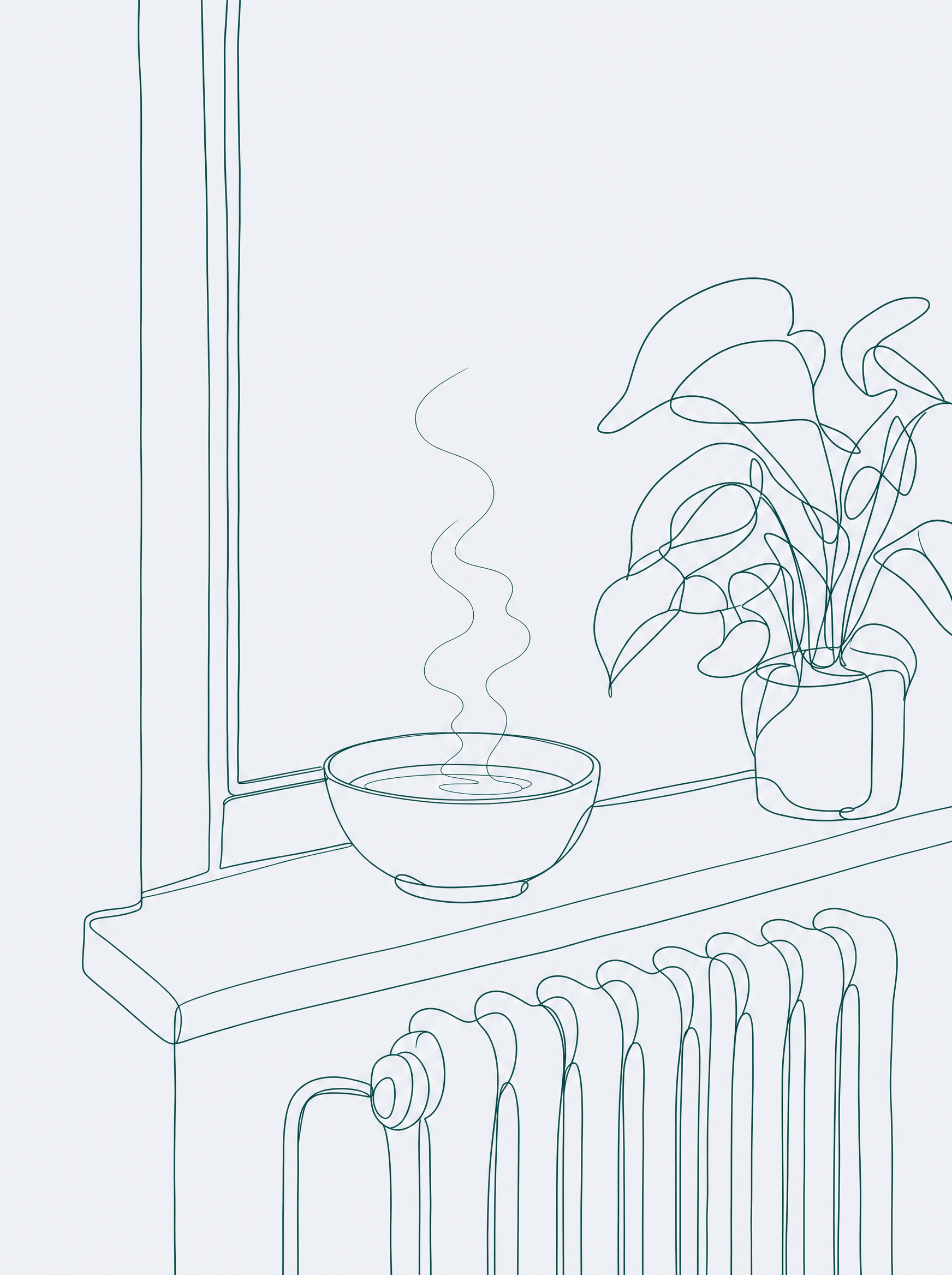
You don't need an expensive humidifier to fix it. A bowl of water near the radiator does the job. Even a few wet towels help bring a dry room back toward comfortable.
Ideal range: 40–60%. That's where your body actually feels at home, and it's a number most people never think to check.
How to fix dry indoor air
Simple, low-cost fixes work for most homes, a dedicated humidifier is only needed for consistent, whole-room control.
Best for consistent control
A humidifier keeps a room reliably in the 40–60% range overnight, especially useful in winter, when heating dries indoor air significantly.
A bowl of water near the radiator
No equipment needed, a bowl of water near a heat source, or a few wet towels hung to dry, adds meaningful moisture back into a dry room.
Know before your throat does
A real-time monitor flags a dry room before it turns into a rough morning, and tells you when it's humid enough to stop.
BAVAMA tells you why your throat feels rough, before you blame yourself.
A 33% reading becomes plain language: your room is too dry, and here's the easiest fix tonight.
- 1Live humidity tracking alongside CO2, VOCs, PM2.5, and temperature, the full picture of a room's air.
- 2Plain-language explanations, so "33%" becomes "too dry, your sinuses are working overtime."
- 3Seasonal nudges, since heated winter air and closed summer AC rooms drift dry in different ways.
Indoor humidity, answered
40–60% relative humidity is the comfort zone for most people. Below 30%, dry air irritates skin and sinuses; above 60–70%, mold and dust mites start to thrive.
Yes, indirectly. Dry air irritates mucous membranes in your nose and throat, making them less effective at trapping and clearing airborne viruses, part of why colds and flu spread more easily indoors during dry winter months.
Not necessarily. A bowl of water near a radiator or a few wet towels can noticeably raise humidity in a small room. For consistent, whole-room control, especially through a full winter, a dedicated humidifier is more effective and lower-maintenance.
Sustained relative humidity above roughly 60–70% creates conditions where mold and mildew can establish and grow, particularly in poorly ventilated bathrooms, basements, and closets. For extra caution, the CDC recommends keeping indoor humidity at or below 50% specifically to prevent mold, a stricter target than the general 40–60% comfort zone.
Too dry: static electricity, cracking wood furniture, and drier skin and airways. Too humid: mold, dust mites, warping wood floors and furniture, and condensation on windows. The 40–60% range avoids both sets of problems.
Early access
Be first to breathe easy.
Join the waitlist and we'll let you know the moment BAVAMA is ready to ship, plus founding-member pricing.
You're on the list. We'll be in touch.
Something went wrong. Please try again in a moment.
We'll only email you about launch. No spam, ever.